Posts

Gurdwara Sri Tarn Taran Sahib

Image
Situated 30 kms from Amritsar, Tarn Taran Sahib is a town in the Majha region of the state of Punjab, in northern India. Gurdwara Sri Tarn Taran Sahib, a prominent Sikh shrine is located in the central part of the city. The site has the distinction of having the largest water pond (sarovar) of all the Gurdwaras in the world. The water pond runs nearly 1000 feet by 750 feet. According to Sikh tradition, the water of the pond was found to possess medicinal properties, especially efficacious for curing leprosy. For this reason the sarovar is also known as Dukh Nivaran - meaning “the eradicator of affliction”. Tarn Taran Sahib was founded by the Fifth Sikh Guru, Shri Guru Arjan Dev Ji (1563–1606). He was so enchanted by its natural beauty that he established a town and named it Tarn Taran - meaning “the boat to cross the ocean of existence”. He laid the foundation of Sri Tarn Taran Sahib Temple. The Gurdwara is an elegant, three-storied structure at the south-eastern corner of the ...
Vadodara - The Cultural Capital of Gujarat

Image
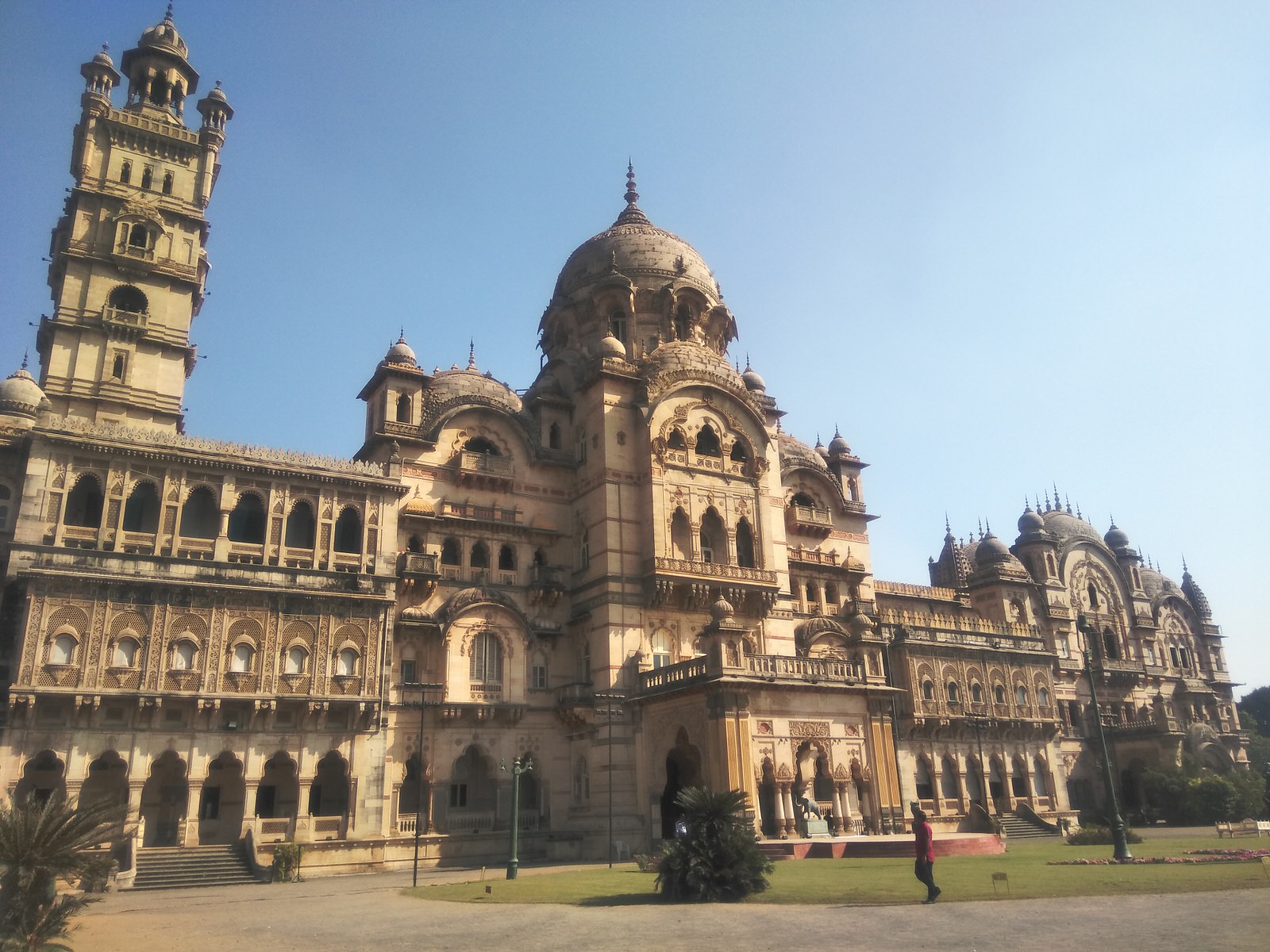
Vadodara, a city in Gujarat in India, also known as Baroda, is named for the vad (banyan) trees that flourish in the area. Vadodara City is also known as cultural capital of Gujarat. The city has a cosmopolitan mixture of Indian nationals as well as that of Non Resident Indians with various tourists visiting this city. The major residents of this City happen to be from the native land of Gujarat and speak Gujarati. Being a multicultural mix, the city has people who are generally found to be able to speak Gujarati, Hindi, Marathi, Sindhi as well as English. For the people of Vadodara today, it's modern history begins with Sayajirao III. Maharaja Sayaji Rao III, who took the throne in 1875, did much to modernize Baroda, establishing compulsory primary education, a library system and the Maharaja Sayajirao University of Baroda. He also encouraged the setting up of textile factories, which helped create Baroda's textile industry. He is well known for offering B. R. Ambedkar a...

Wagah Border Ceremony - Daily Patriotic Fervor

Image
Attari, also spelled Atari, is a village of Amritsar District in the Punjab state of India, 3 kms from the Indo-Pakistani border at Wagah. It is situated 25 kms west of the Sikh holy city of Amritsar. It is the starting point of the National Highway 1, part of the historic Grand Trunk Road and is also part of AH1, the longest route of the Asian Highway Network. This small village has gained a prominent place in Indian tourism owing to the flag lowering ceremony that takes place here at the border everyday before sunset on both sides of the nations. The Wagah Border Ceremony, more popularly known as Beating Retreat Ceremony, was started in 1959. The occasion is to symbolically close the border for the night and lower the National Flags of both nations. The Flag Lowering Ceremony is done everyday before sunset. Free entry starts on the Indian side at around 4 PM into a large semi-circular open stadium built specially for the ceremony. There is a smaller stadium built on the Pa...

Statue of Unity - World's Tallest Statue

Image
The Statue of Unity is a colossal statue of Indian statesman and independence activist Sardar Vallabhbhai Patel (1875–1950), who was the first Deputy Prime Minister and Home minister of independent India and the chief adherent of Mahatma Gandhi during the non-violent Indian Independence movement. It is the world's tallest statue with a height of 182 metres (597 ft). The number 182 represents the total democratic assembly constituencies in the state of Gujarat. Patel was highly respected for his leadership in uniting the 552 princely states of India to form the single Union of India, aptly conferring him the title of "The Iron Man of India". It is located in the state of Gujarat, India, on a river facing the Sardar Sarovar Dam on river Narmada in Kevadiya colony, 100 kms southeast of the city of Vadodara and 150 kms from Surat. The project was first announced in 2010 and the construction of the statue started in October 2013 by Larsen & Toubro. At the time,...

Belur & Halebidu – Two Cities of Exquisite Art

Image
The Hoysala Kings ruled most part of Karnataka, the Southern state of India from 10th to 14th century. These Kings were great patrons of Art, Architecture and commissioned some of the best stone temples ever built. Belur-Halebidu, in Hassan district of Karnataka, go together like twin cities. Separated only by a short drive, both were home to the Hoysala dynasty for three centuries (mid-11th to mid-14th century). The Belur and Halebidu temples are cut from the soft stone called chloritic schist. It allowed for very fine detailing, evident in the intricately carved temple walls. As representations of South Indian styles they are comparable only to the temples at Khajuraho. Of special interest are the engineering techniques used in assembling the temple, particularly the locking systems that used grid locks, interlocks, and the pin & socket system. They were used for attaching separately carved panels onto the walls and ceilings, achieving a continuous and inseparable appearance ...

Melukote – A Land with a Rich Heritage

Image
Melukote in Karnataka, southern India, is one of the sacred places of the Hindu religion. The place is also known as Thirunarayanapuram. It is built on rocky hills, known as Yadugiri, Yaadavagiri and Yadushailadeepa, overlooking the Cauvery valley. Melukote is about 51 kms from Mysore and 133 kms from Bangalore. Melukote is the location of the Cheluvanarayana Swamy Temple. On the top of the hill is the temple of Yoganarasimha. It is believed that the image of Yoga Narasimha temple was installed by Prahlada himself. Krishnaraja Wodeyar III presented a gold crown to Lord Yoga Narasimha. Many more shrines and ponds are located in the town. Melukote is home to the Academy of Sanskrit Research, which has collected thousands of Vedic and Sanskrit manuscripts. Early in the 12th century, the famous Srivaishnava saint Sri Ramanujacharya, who hailed from Tamil Nadu, stayed at Melukote for about 12 years. It has thus become a prominent centre of the Srivaishnava sect. The raja gopuram (e...